
Recently, a company approached us with what sounded like a straightforward request.
"We're looking for a new CMS."
Naturally, our first question was:
"What problem are you trying to solve?"
The room went quiet.
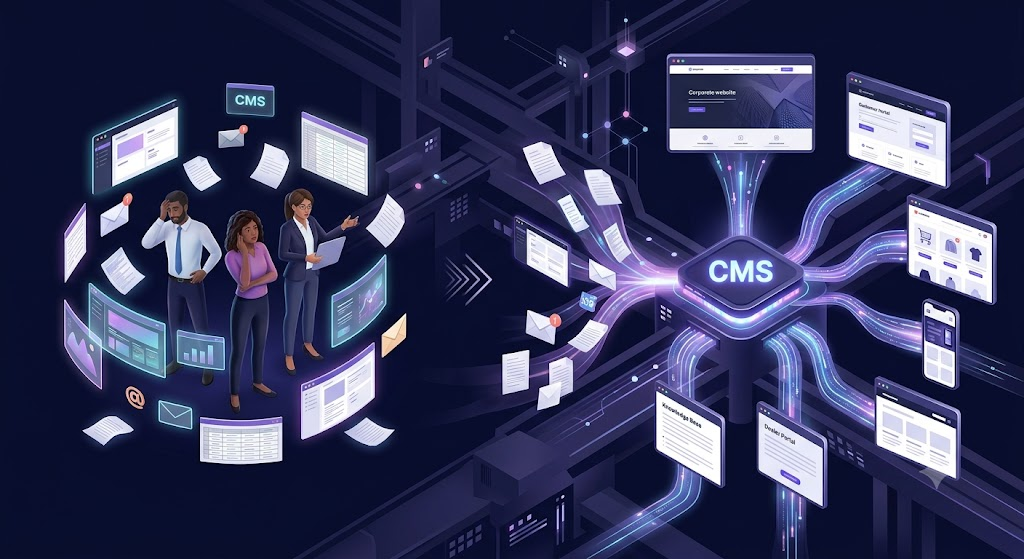
After a short discussion, it became clear they weren't just looking for a better website editor. Their marketing team wanted to publish content faster. Their product team needed to keep information consistent across multiple channels. Regional offices were maintaining different versions of the same content, and developers were spending too much time making simple content updates.
In other words, they didn't have a website problem.
They had a content operations problem.
At KGU Technology, we've seen similar conversations across enterprise digital projects. While every organization is different, one thing has become increasingly clear:
A modern Content Management System (CMS) isn't just a tool for publishing web pages anymore. It's the foundation of how organizations create, manage, and deliver digital experiences.
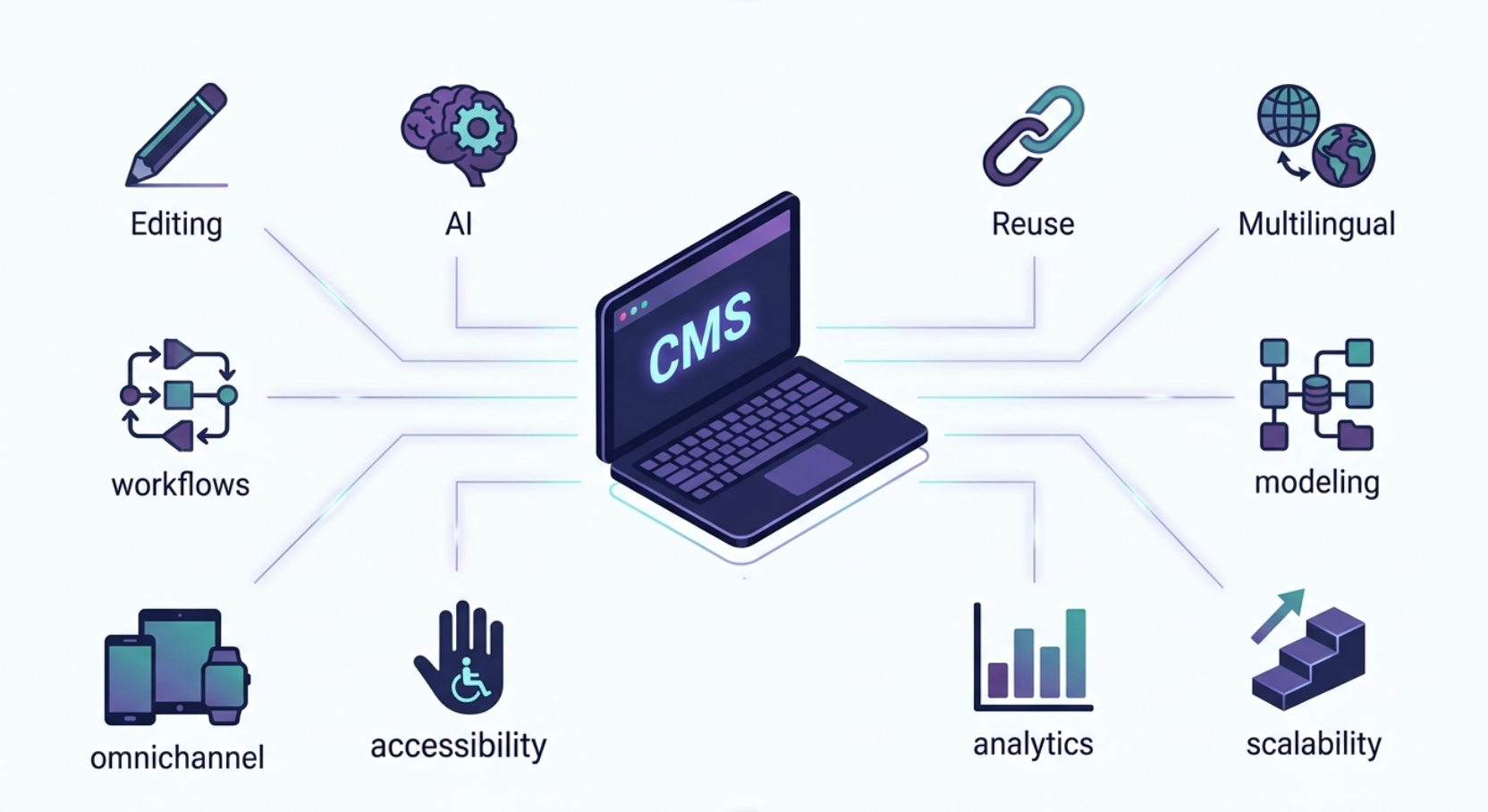
If you're evaluating a CMS today, here are the ten capabilities we believe matter most.

1. An Editing Experience That Anyone Can Use
The best CMS isn't necessarily the one with the longest feature list.
It's the one people actually enjoy using.
When content editors struggle with formatting, rely on developers for every small change, or spend hours fixing layouts copied from Word documents, publishing becomes slow and frustrating.
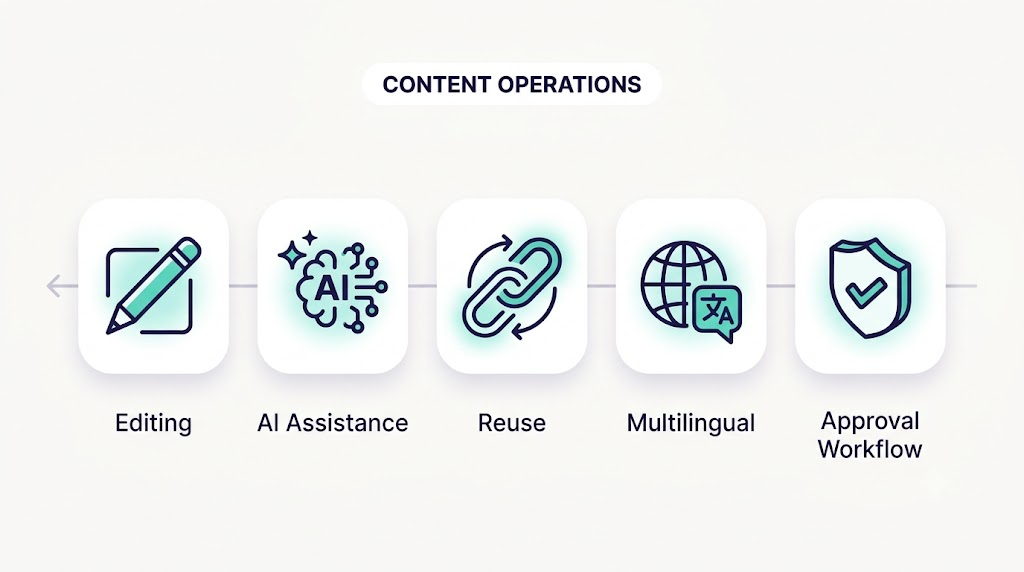
Now with modern CMS platforms, things become more efficient. They focus on intuitive editing experiences with drag-and-drop components, visual page builders, reusable content blocks, and real-time previews.
At KGU, we've learned that when content teams can work independently, everyone benefits—including developers.
2. AI That Removes Repetitive Work
AI has become one of the biggest talking points in enterprise software.
But in practice, most organizations aren't asking AI to replace their content teams.
Instead, they're asking AI to save time.
The most valuable AI features today include:
● AI-assisted translation
● SEO title and metadata suggestions
● Automatic image alt text
● Content summaries
● Smart tagging and categorisation
These aren't flashy features.
They're practical improvements that help teams focus on creating better content instead of repetitive administration.
3. Content That Can Be Reused Across Every Digital Channel
Imagine changing your company's office address.
Now imagine updating it across:
● Your corporate website
● Customer portal
● E-commerce store
● Mobile app
● Knowledge base
● Dealer portal
Manually updating every channel isn't just inefficient—it increases the risk of inconsistent information. While modern CMS platforms use structured content so information can be created once and reused everywhere.
As organizations expand their digital presence, this becomes one of the biggest productivity gains.
4. Multilingual Content Without the Chaos
Global businesses rarely manage just one website.
Different countries need different languages, local campaigns, regulatory information, and approval processes.
We've seen organizations maintain separate copies of the same content simply because their CMS couldn't support multilingual workflows effectively.
A modern enterprise CMS should simplify this with centralized content, AI-assisted translation, regional variations, and localization workflows that keep global teams aligned while allowing local flexibility.
5. Approval Workflows That Reflect How Teams Really Work
Publishing content isn't usually a one-person job.
Marketing creates it.
Product teams review it.
Legal checks compliance.
Regional teams localize it.
Executives sometimes want the final approval.
Without structured workflows, content quickly becomes buried in email chains and chat messages.
A modern CMS should make approvals transparent with role-based permissions, version history, scheduled publishing, and complete audit trails.

6. Content Modelling Instead of Copy-and-Paste
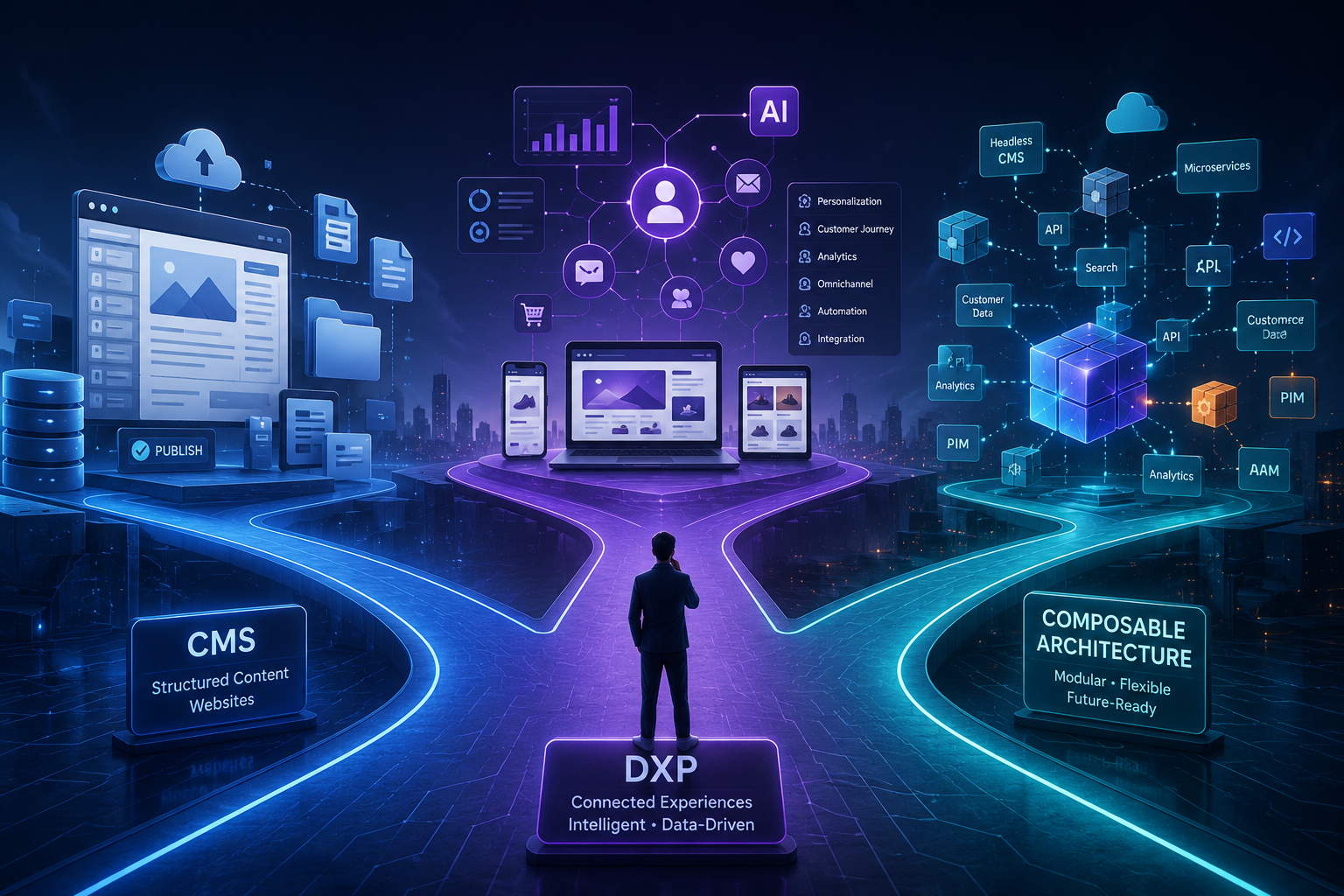
One of the biggest shifts in modern CMS platforms is treating content as structured data instead of static web pages.
Instead of copying the same product description into five different locations, organizations can create it once and reuse it wherever it's needed.
This reduces duplication, improves consistency, and makes future updates significantly easier.
7. Omnichannel Publishing
Today's customers don't only visit websites.
They interact through mobile apps, customer portals, digital displays, partner platforms, online communities, and even AI-powered assistants.
A modern CMS should deliver content wherever customers expect it—not just on a single website.
8. Accessibility Should Be Built In
Accessibility isn't simply about compliance.
It's about creating digital experiences that everyone can use.
Features such as accessibility checking, image alt text suggestions, semantic content structures, and keyboard-friendly components help organizations build more inclusive digital experiences from day one.
It's much easier to build accessibility into your publishing workflow than to fix it afterwards.
9. Analytics That Explain More Than Page Views
Publishing content is only half the job.
Understanding how people interact with it is equally important.
Modern CMS platforms increasingly integrate analytics that help teams understand what content performs well, where users drop off, and what should be improved.
Better insights lead to better content decisions.
10. A CMS That Can Grow With Your Business
Perhaps the most overlooked feature isn't a feature at all.
It's scalability.
Your organization may only manage one website today.
But what about three years from now?
Will you need multilingual content?
Partner portals?
Customer communities?
An e-commerce platform?
A learning management system?
The right CMS should support where your business is heading—not just where it is today.
Our Perspective at KGU Technology
One lesson we've learned from enterprise digital projects is that successful CMS implementations rarely start with software.
They start with understanding how people create, review, publish, and reuse content across an organization.
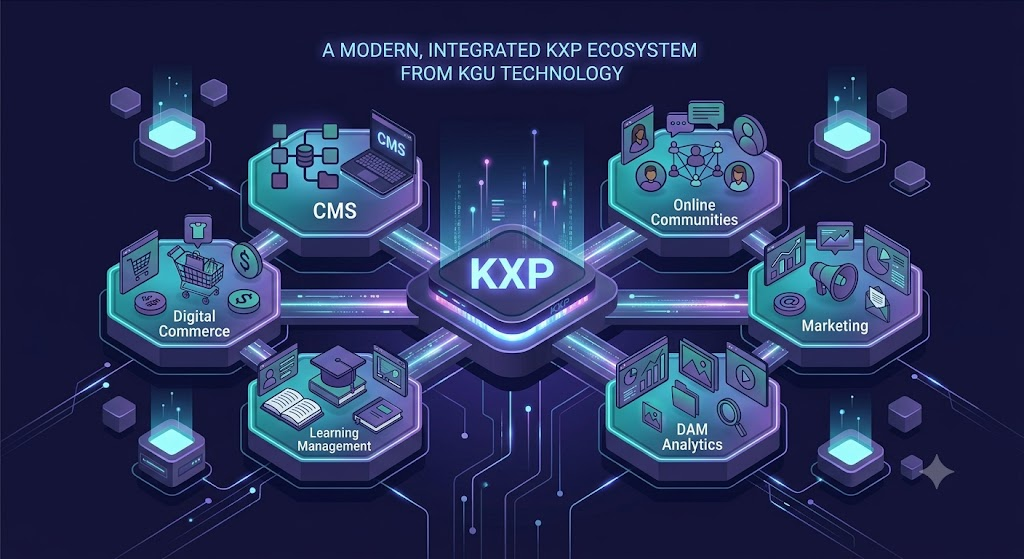
That's also the thinking behind KXP, KGU Technology's Digital Experience Platform.
Rather than treating content management as an isolated function, we designed KXP to support the broader digital ecosystem—bringing together enterprise CMS, digital commerce, member portals, online communities, AI-assisted multilingual publishing, content governance, analytics, and campaign management in a single platform.

The technology is important.
But understanding how organizations actually work is even more important.
If you're evaluating a CMS this year, don't ask which platform has the most features.
Ask which platform will still support your business as it grows.
That answer is usually far more valuable than any feature checklist.