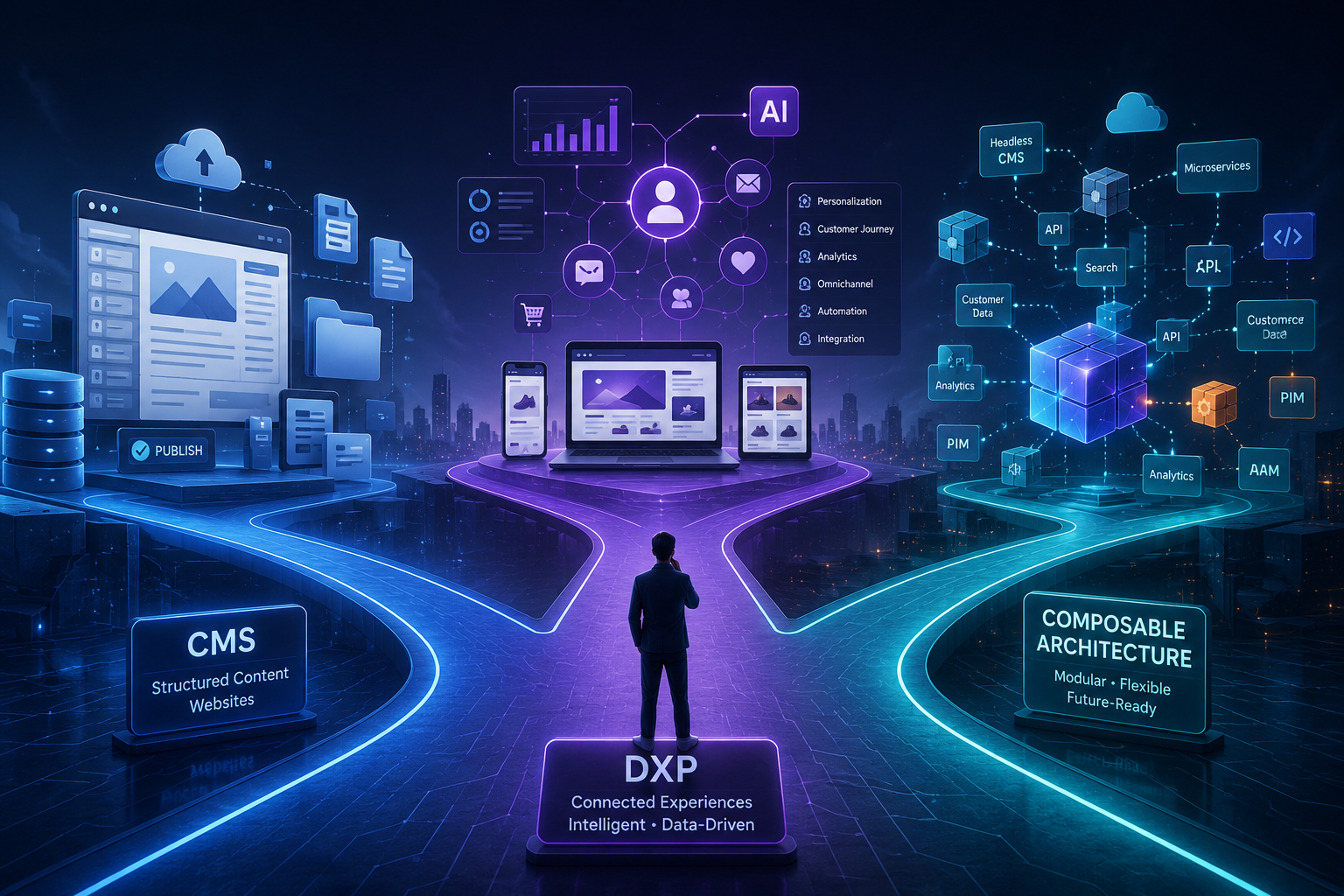



A plain guide to three terms every enterprise tech buyer eventually has to untangle.
A few months ago, a client came to us comparing enterprise software platforms.
They asked a question we've heard many times before.
"Aren't CMS, DXP, and Composable Architecture basically the same thing?"
Honestly, we understood the confusion. Every vendor seemed to be describing a similar solution, just using different terms to fit their own product.
They aren't the same.
And once we explained the differences, it only took about five minutes for everything to click.
It completely changed how they approached the decision.
Here's the same explanation we shared with them.
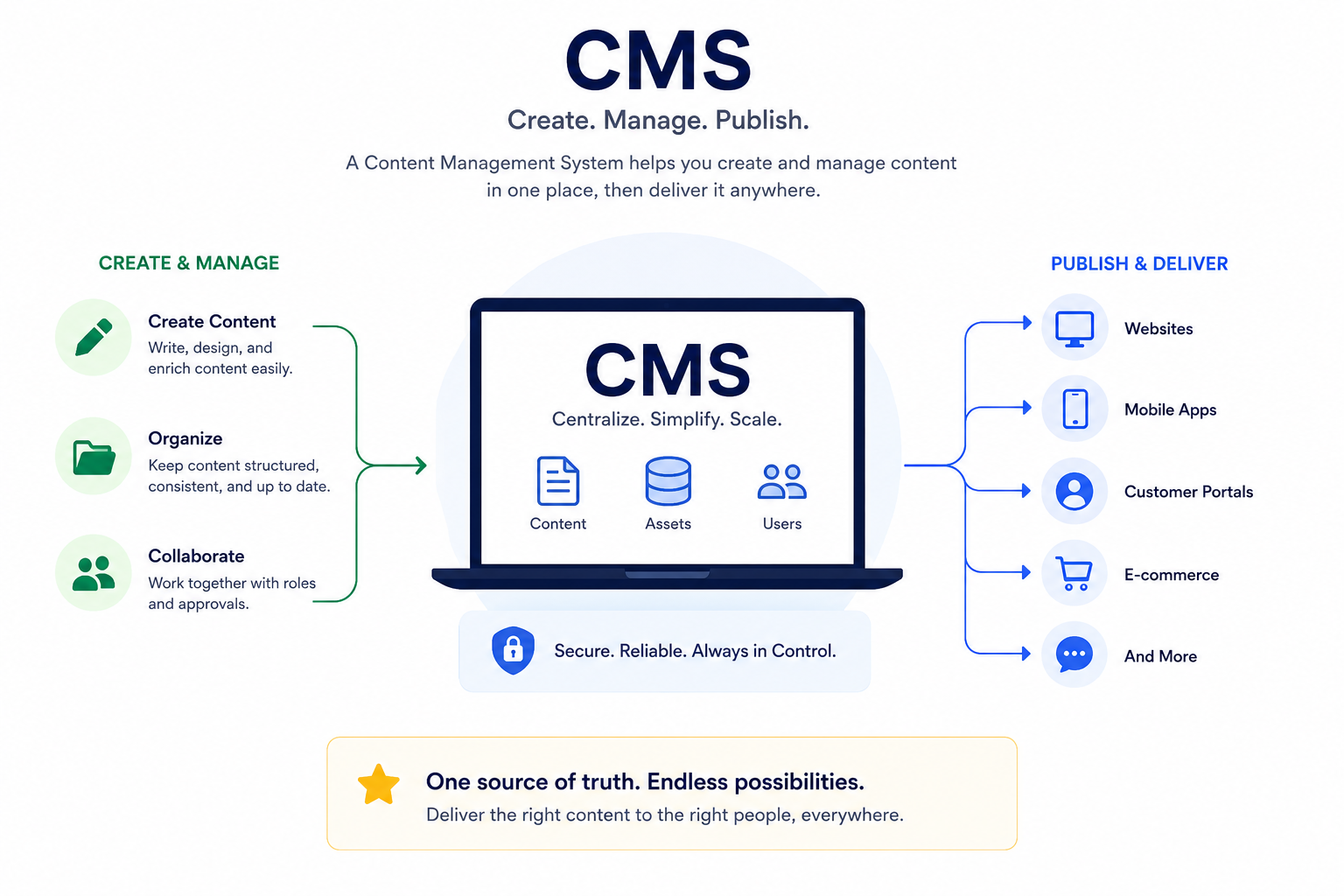
What is a CMS?

A Content Management System (CMS) was built to solve one core problem: How do we create, edit and publish content efficiently?
If your goal is to manage a company website, news articles, product pages or blogs, a CMS is often enough. It gives content teams an easy way to publish without relying on developers for every update.
Simple. Reliable. Effective.
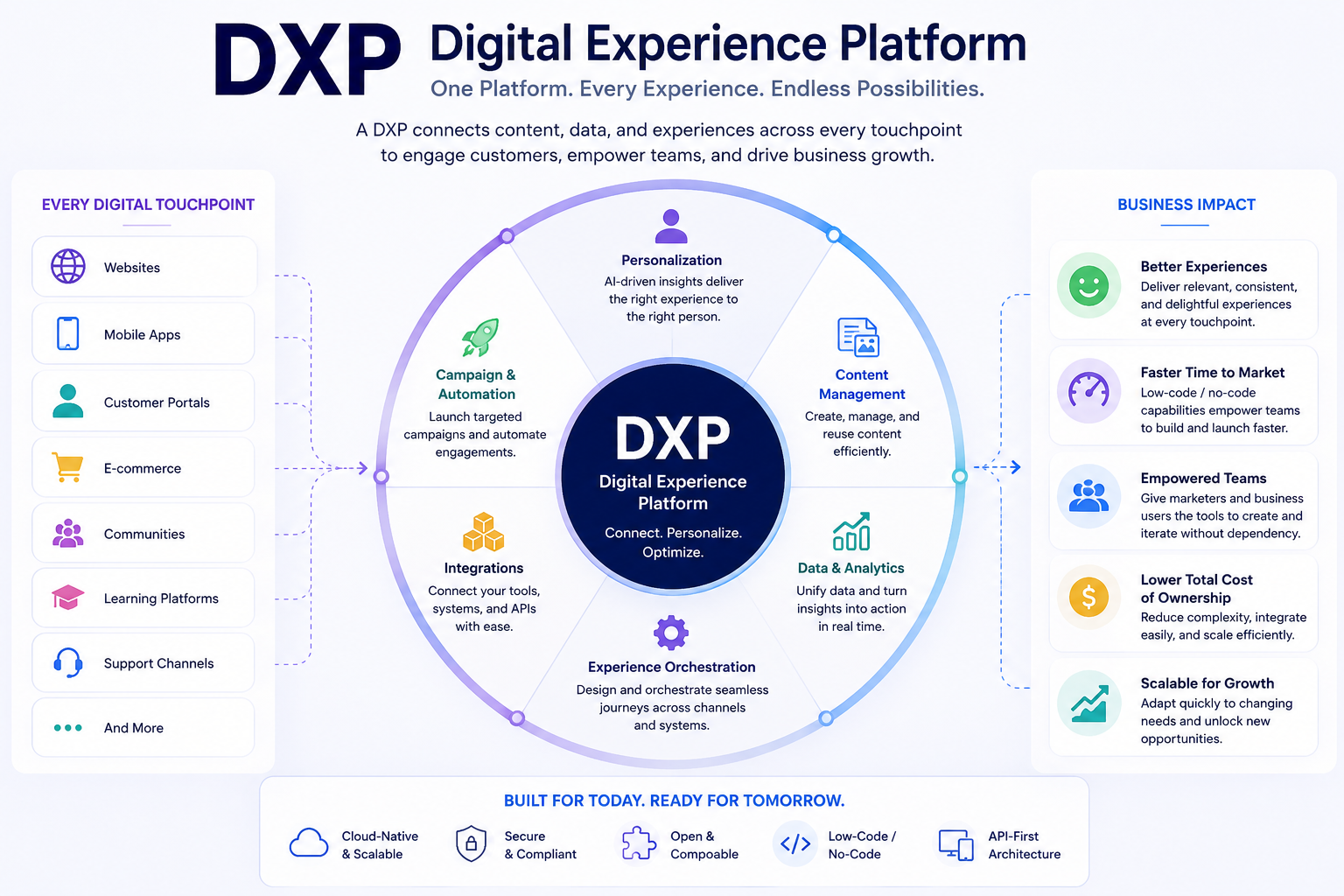
What is a DXP?
In 2026, digital experience matters more than ever. User expectations have changed drastically.
As businesses have grown, the website is no longer the only digital touchpoint. Customers now expect AI-powered personalization, seamless journeys, and experiences that feel connected from start to finish.
What matters now isn't just having all these platforms. It's how well they work together to help people achieve what they came for.
That's where a Digital Experience Platform (DXP) comes in.

A DXP goes beyond content management. It brings together websites, customer portals, e-commerce, communities, learning platforms, and more into one connected experience.
Another reason DXPs have gained traction is the rise of low-code or no-code capabilities. Business teams can launch pages and campaigns faster, while developers focus on solving more complex problems.
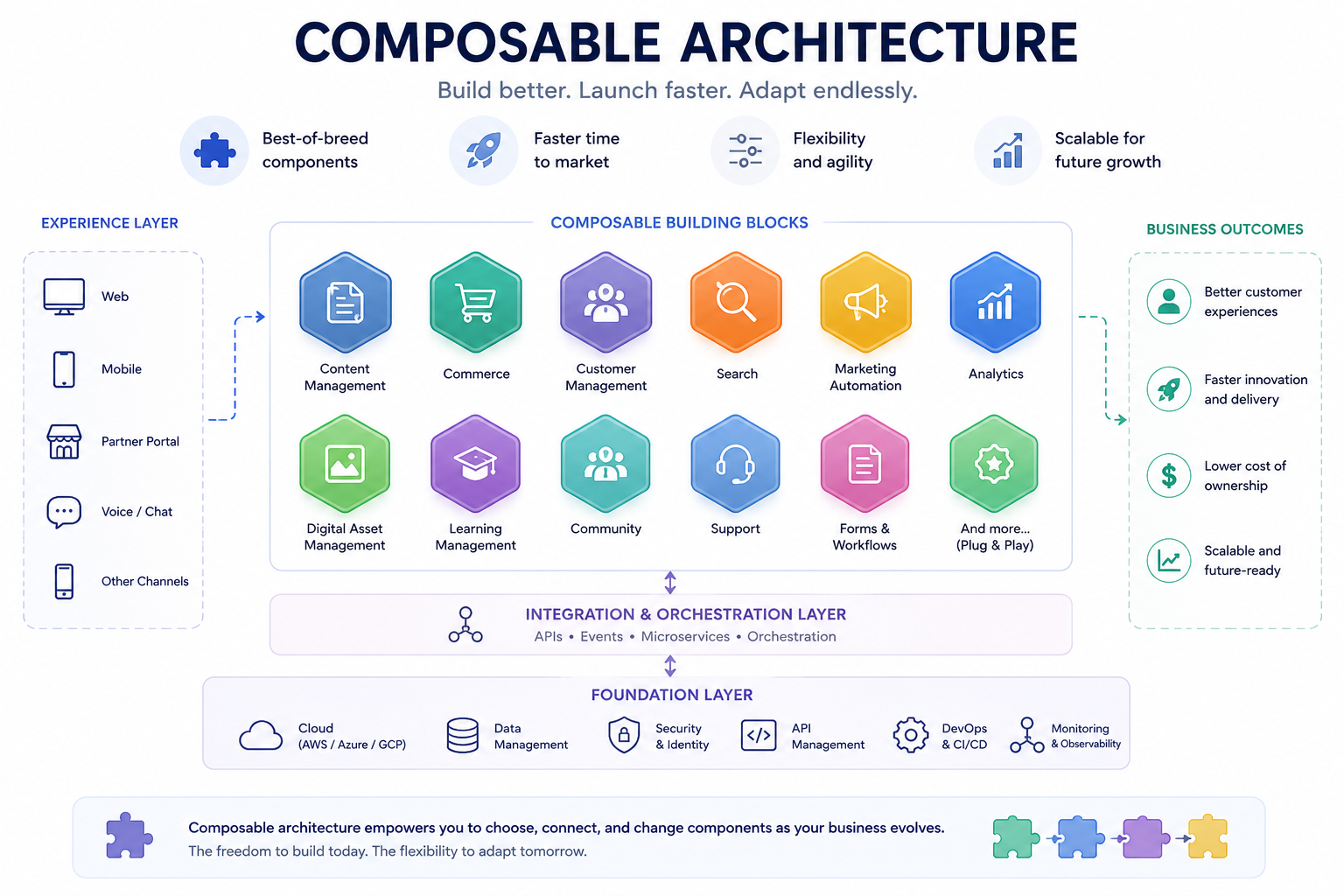
What is Composable Architecture?

Composable Architecture takes a different approach. Instead of buying one large platform, organizations assemble the tools they need:
● One solution for content.
● Another for commerce.
● Another for search.
● Another for analytics.
Everything connects through APIs. This offers greater flexibility, especially for enterprises with mature technical teams. But it also introduces more integration, governance and maintenance. It's not automatically better. It's simply a different strategy.
How we think about it in practice
Imagine you're running a B2B software company. A potential customer discovers your website, downloads a white paper, joins your community, signs up for product training, logs into a customer portal, and eventually purchases your solution.
If all you have is a CMS, each of those steps probably lives on a different system that doesn't talk to the others. The customer re-enters their name for the third time. Your sales team has no idea they've already been through training. The experience feels like six different companies, not one.
A DXP is what stitches that journey together — so the person who read the white paper is recognized when they show up in the community, and the portal already knows what they've completed.
Composable Architecture is what makes that stitching possible without forcing you into one vendor's version of "community" or "training" — your team picks the best tool for each piece and connects them with APIs instead of settling for whatever a single platform bundles in.
The difference isn't which tool is smarter. It's whether the customer ever notices the seams.
CMS vs DXP vs Composable Architecture: At a Glance
|
|
Core purpose
|
Best for
|
Main tradeoff
|
|
CMS
|
Create, edit, publish content
|
Websites, blogs, product pages
|
Limited beyond content
|
|
DXP
|
Orchestrate connected digital journeys
|
Multi-touchpoint customer experiences
|
Can mean vendor lock-in
|
|
Composable
|
Assemble best-of-breed tools via APIs
|
Mature teams needing flexibility
|
Higher integration overhead
|
So, which one is better?
That's usually the first question clients ask us. And at first, it seems like there should be a clear winner.
There aren't.
Each one solves a different problem — which means the right answer depends on what the business actually needs, not which platform sounds more advanced. So instead of asking which is better, we ask clients a different question first: what problem are you actually trying to solve?
Why this matters
One thing we've learned after working with enterprise clients for more than 15 years is this:
Most companies aren't looking for another platform.
They're trying to solve a growing problem that has been building up for years.
We've seen this pattern across industries for years. Marketing adopts one platform. Sales chooses another. Customer service, learning, and e-commerce each bring their own systems. Every decision makes sense on its own. But as more systems are added, they become harder to connect. Data becomes fragmented. Teams waste time moving information instead of serving customers. Eventually, customers experience that disconnected too.
Customers don't care how many platforms your business owns. They only notice when those platforms don't work together.
That experience is exactly why we built KXP (KGU Digital Experience Platform).
We didn't want to build another standalone product. We wanted to build a connected foundation that grows with the business. KXP unifies enterprise CMS, e-commerce, e-communities, e-learning, digital marketing, digital asset management, and data analytics in one modular ecosystem.
The goal is simple.
Help organizations create connected digital experiences. One step at a time. At a pace that fits their business, without forcing them to replace everything overnight.
Of course, bringing systems together is only part of the picture. Enterprise organizations also need a platform they can trust.
That's why KXP is built with enterprise security and compliance in mind. It supports global requirements such as GDPR and CCPA, alongside China's cybersecurity and data compliance frameworks, helping organizations innovate while meeting evolving regulatory expectations.
Because in the end, technology should support the experience. Not create more complexity.
Final thought
Technology will continue to evolve.
New platforms will emerge. New buzzwords will follow.
But the goal stays the same: create digital experiences that are simple, connected, and valuable for the people using them.
So I'll leave you with one final question.
If you're leading a digital transformation project, where is your biggest challenge today? Managing content, connecting customer journeys, or integrating multiple platforms? I'd love to hear your perspective.